國科會計畫 · 研究助理(兩年)NSTC Project · RA (2 yrs)
上肢外骨骼施力估測Upper-Limb Exoskeleton Force Estimation
以 MATLAB 與 EMG 開發外骨骼的施力估測與姿態識別,應用於復健。Built force estimation and posture recognition for an exoskeleton using MATLAB and EMG, for rehabilitation.
概述Overview
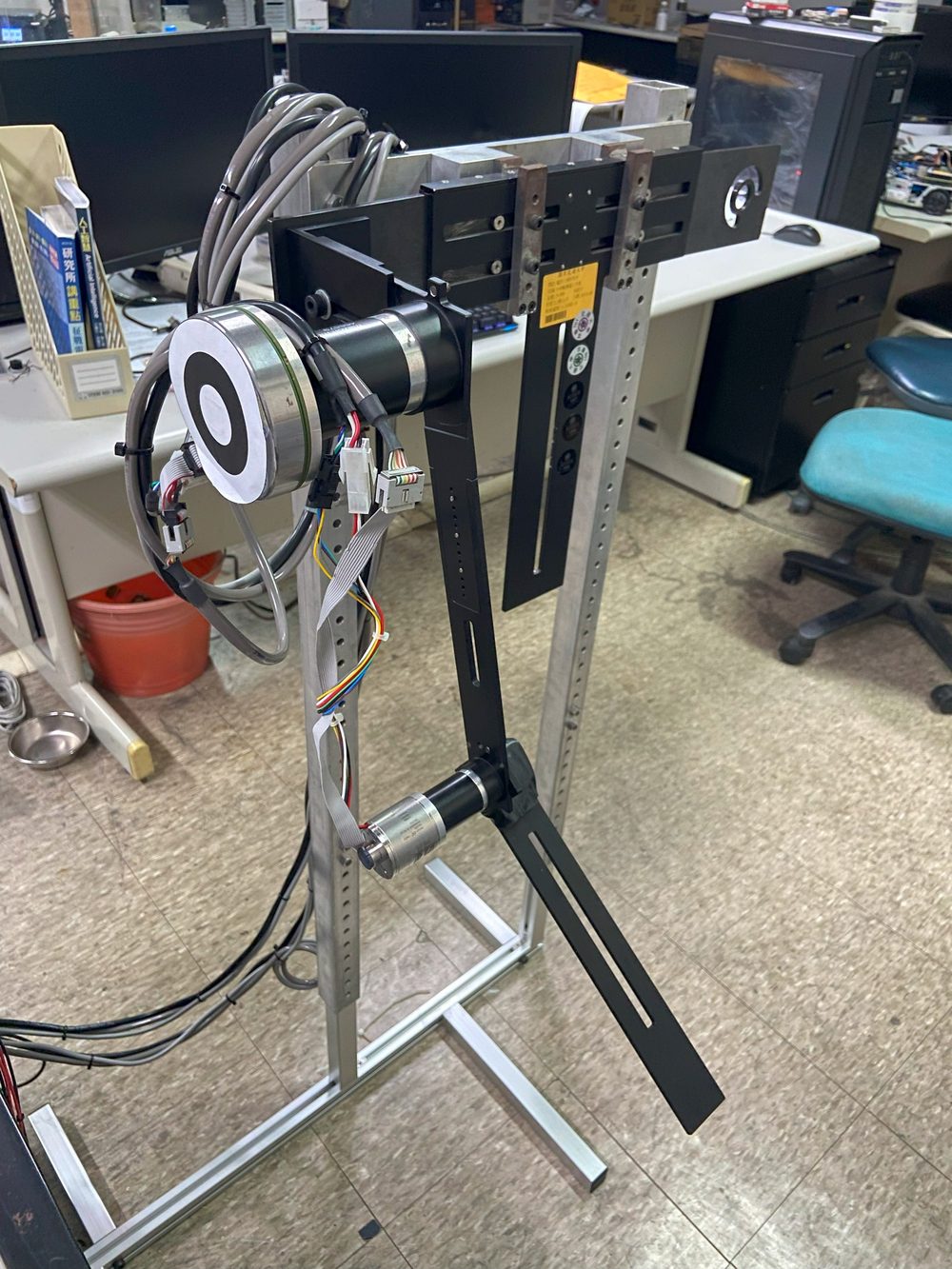
於國科會「具適應性之主被動式上肢外骨骼機器人系統開發及其於復健之應用」計畫擔任兩年研究助理。上肢外骨骼若要協助中風或肌力退化患者復健,關鍵在於「讀懂使用者想出多少力」——唯有正確估測人體的施力意圖,外骨骼才能適時提供主動輔助或被動阻抗,避免過度代償。我負責的核心子題,就是以肌電(EMG)訊號為基礎,建立人體施力的估測與姿態識別模型。A two-year research-assistant role on an NSTC-funded adaptive active-passive upper-limb exoskeleton project. For an upper-limb exoskeleton to aid stroke or muscle-weakness rehabilitation, the key is reading how much effort the user intends to exert — only with an accurate estimate of human force intent can the exoskeleton supply active assistance or passive resistance at the right moment without over-compensating. My core sub-task was to build force-estimation and posture-recognition models from electromyography (EMG) signals.
方法Method
- 訊號擷取:以表面肌電(sEMG)感測器量測上肢主要肌群的活化訊號。Acquisition: surface EMG (sEMG) sensors capture activation from the main upper-limb muscle groups.
- 前處理:於 MATLAB 進行帶通濾波、整流、移動 RMS 平滑與最大自主收縮(MVC)正規化,抑制雜訊與個體差異。Pre-processing: band-pass filtering, rectification, moving-RMS smoothing, and MVC normalization in MATLAB to suppress noise and inter-subject variation.
- 施力估測:建立 EMG 活化量與實際關節施力之對應模型,輸出連續的施力估測值。Force estimation: a model mapping EMG activation to actual joint effort, outputting a continuous force estimate.
- 姿態識別:依肌群活化模式辨識動作意圖(如屈曲/伸展),供外骨骼控制器決策輔助時機。Posture recognition: classifies movement intent (e.g., flexion/extension) from activation patterns to inform the exoskeleton controller's assist timing.
我的角色與收穫Role & Takeaways
兩年期間我負責訊號處理流程與估測模型的開發與驗證,並協助實驗資料的蒐集與分析。這段經歷讓我紮實地建立生醫訊號處理、特徵工程與人機協作控制的基礎,也是我日後投入 AI 與訊號相關研究的起點。Over two years I owned the signal-processing pipeline and the development and validation of the estimation models, and supported experimental data collection and analysis. The work gave me a solid foundation in biomedical signal processing, feature engineering, and human-robot cooperative control — and set the stage for my later AI and signal research.